 中文
中文Basalt Fiber Protective Garments Outperform Cotton Aramid and Fiberglass in Petroleum Industry Performance Tests
Product Overview
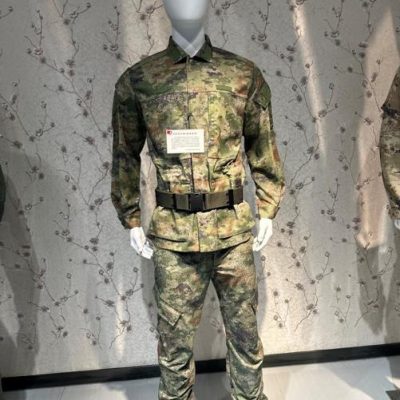
Protective clothing used throughout the petroleum industry must withstand aggressive chemical exposure, fire risk, and electrostatic hazards while remaining wearable across long shifts. This performance comparison evaluates basalt fiber woven protective textiles against cotton flame-retardant, CottnPolyester flame-retardar, aramid, polyethylene, and fiberglass fabrics across the service conditions most relevant to oil and gas operations. The data below quantify how each material behaves after immersion in crude oil, diesel, and dilute acid or alkali, as well as under flame-retardancy, electrostatic, tear, wash, and environmental exposure tests. Basalt fiber consistently demonstrates strong retention of mechanical and protective properties, positioning it as a durable choice for hazardous duty where garment failure is not an option.
Technical Specifications
| Test Item | Basalt fiber | Cotton flame-retardant | CottnPolyester Flame-retardar | Aramid | Polyethylene | Fiberglass |
|---|---|---|---|---|---|---|
| Resistant to corrosion from crude oil/diesel fuel (Soak for 72 hours) | The strong retention rate is ≥90%, No swelling, no discoloration | The strong retention rate is less than or equal to 60%, Easy to absorb oil, swell, and mold | The strong retention rate is ≥75%, Slight oil absorption, with a surface prone to yellowing | The strong retention rate is ≥85%, No obvious corrosion, with a small amount of oil absorption | The strong retention rate is ≥95%, Non-oil-absorbing, non-corrosive, and stable performance | The strong retention rate is less than or equal to 70%, Easy to absorb oil and powder, with loose structure |
| Acid and alkali resistance (soaked in 5% H₂SO₄/NaOH for 24 hours) | The strong retention rate is ≥85%, No corrosion marks | The strong retention rate is less than or equal to 50%, Hydrolysis and fracture of cotton fibers | The strong retention rate is ≥65%, The polyester part is partially resistant to corrosion, while the cotton component is prone to damage | The strong retention rate is ≥80%, Resistant to weak acids and alkalis, slightly hydrolyzed under strong acids and alkalis | The strong retention rate is ≥98%, Resistant to strong acids and alkalis, with no damage | The strong retention rate is less than or equal to 60%, Rapid embrittlement and pulverization under strong acid and alkali conditions |
| flame retardant performance (GB8965.2-2024) | Difficult to ignite, with an oxygen index of ≥38%, No drips, no toxic fumes, and no shedding after carbonization | Flame retardant, with an oxygen index of ≥30%, No drips, less smoke, It is prone to breakage after carbonization | Flame retardant, with an oxygen index of ≥32%, Slight drips (polyester component), low-toxic smoke | Flame retardant, with an oxygen index of ≥35%, No drips, no toxic fumes, good charring stability | Flammable, with an oxygen index of ≤22%, It needs to be dipped and coated with flame retardant, High-temperature fusible droplet (risk of burns) | Difficult to ignite, with an oxygen index of ≥36%, No drips, less smoke, It is prone to pulverization after carbonization |
| Charge half-life | ≤0.5s, fast electrostatic discharge, No accumulation risk | ≤1s, under low humidity conditions | Extended to more than 3s | ≤0.8s, washable for 10 times | ≤0.3s, optimal electrostatic discharge, strong washability | ≤1s, conductive fiber Uneven distribution is prone to local accumulation |
| Oil resistance and penetration resistance (10# oil immersion for 30 minutes) | Impermeable, easy to wipe and clean, leaving no residue | Complete penetration, with fibers adsorbing oil stains, making it difficult to clean | Slight penetration, surface oil stains can be wiped off, with a small amount of residue inside | Slightly permeable, easy to clean, residue-free | Impermeable, with a smooth surface, Oil stains are prone to sliding off | Partial penetration, oil residue Easy to agglomerate |
| Tearing strength | ≥100N, with good tear resistance, not prone to developing gaps | ≥60N, poor tear resistance, easy to break | ≥80N, medium tear resistance | ≥120N, excellent tear resistance | ≥150N, with optimal tear resistance | ≥50N, extremely poor tear resistance, slight tearing upon hooking or pulling |
| Washability (After 50 industrial washes) | The performance retention rate is ≥85%, Flame retardant, anti-static, and non-deteriorating | Performance retention rate ≤60% flame retardant and antistatic agent failure | he performance retention rate is ≥75%. The flame retardancy and antistatic properties have slight… | The performance retention rate is ≥90%, stable performance | The performance retention rate is ≥80%, The flame-retardant coating is prone to peeling off | Performance retention rate ≤50%, Easy to pulverize, structural damage |
| environmental friendliness (The homework poses no harm) | No fibrous dust, no toxic additives, biodegradable after disposal | No obvious harm, After combustion, there is a small amount of smoke and dust | The polyester component is difficult to degrade, Burning produces slightly toxic smoke | No harm, good environmental protection, No secondary pollution after disposal | Flame-retardant coating may Containing trace amounts of harmful substances | Glass fiber dust It is easy to irritate the respiratory tract and pose a threat to health |

Performance Comparison of Protective Clothing in the Petroleum Industry
Protection Against Extreme
Environments
Key Features & Advantages
• ≥90% strength retention after 72 hours of crude oil / diesel fuel immersion, with no swelling or discoloration
• ≥85% strength retention after 24 hours in 5% H₂SO₄ / NaOH, showing no corrosion marks
• Oxygen index ≥38% (GB8965.2-2024): difficult to ignite, no drips, no toxic fumes, no shedding after carbonization
• Charge half-life ≤0.5s for fast electrostatic discharge with no accumulation risk
• Tearing strength ≥100N with good tear resistance and no gap propagation
• ≥85% performance retention after 50 industrial washes — flame retardant, anti-static, non-deteriorating
• No fibrous dust, no toxic additives, and biodegradable after disposal
Application Scenarios
Protection Against Extreme
Environments
The comparative data center on petroleum-industry service conditions, where protective garments face crude oil, diesel, acidic and alkaline process streams, open flame, and static-charge hazards. Basalt fiber protective clothing is suited to refineries, offshore platforms, tank farms, and petrochemical plants, as well as any high-risk industrial setting that demands reliable flame resistance, chemical durability, and electrostatic safety over extended service.

Industry Value & Conclusion
The comparative performance data demonstrate that basalt fiber protective garments deliver a comprehensive advantage across flame retardancy, chemical resistance, electrostatic control, and durability, establishing a dependable specification for hazardous industrial duty.