 中文
中文Basalt Fiber Photovoltaic Mounts: Corrosion-Resistant Lightweight Bracket Advantages and Technical Performance
Product Overview
advantage
※ The density is approximately 2.0g/cm3, which is 1/4 of that of steel supports. When the cross-sectional area
is doubled, the weight can be reduced by 50%.
※ It has a low coefficient of thermal expansion, approximately 7×10⁻⁶/℃, which is about half that of steel
supports, providing good dimensional stability.
※ With good insulation performance, the volume resistance is approximately 10120.m, which is conducive to
slowing down the power attenuation of battery components.
※ Basalt fiber exhibits excellent corrosion resistance, weather resistance, and UV resistance;
The theoretical lifespan of photovoltaic (PV) supports can reach 25 to 30 years, offering significant
advantages in areas such as seaports, coasts, and saline-alkali soils.
※ Basalt fiber exhibits good fatigue resistance and excellent creep resistance.
※ Basalt fiber is made by melting and drawing natural basalt ore, which is green and environmentally friendly,
causing little pollution to the environment.
project
unit
performance
density
g/cm³
1.9-2.1
modulus of elasticity
Gpa
≥45
tensile strength
Mpa
≥1000
bending strength
Mpa
≥800
Longitudinal thermal expansion coefficient
X10-6/℃
6-12
High temperature and high humidity strength
retention rate
%
≥85
Performance of Basalt Fiber Photovoltaic Support
Basalt Composite Material
disadvantage
※ The application scale is relatively small, and there are fewer relevant specifications and standards
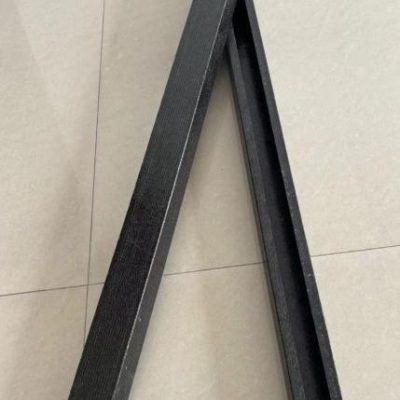
The source page presents a balanced comparison of basalt fiber photovoltaic solar panel mounts, setting out the material’s documented strengths alongside the one openly acknowledged limitation. The advantage set covers mass savings, dimensional stability, electrical insulation, environmental durability, fatigue and creep behavior, and a green manufacturing route, while the specification table quantifies the composite’s baseline mechanical and thermal properties. Together they give procurement and design teams a compact, decision-ready reference for evaluating basalt composite racking against steel. The closing note honestly records that commercial adoption remains at an early stage, with fewer standards and codes specifically written for the material.
Technical Specifications
The following table reproduces the performance of basalt fiber photovoltaic support, with all project, unit, and performance values verbatim from the source.
| project | unit | performance |
|---|---|---|
| density | g/cm³ | 1.9-2.1 |
| modulus of elasticity | Gpa | ≥45 |
| tensile strength | Mpa | ≥1000 |
| bending strength | Mpa | ≥800 |
| Longitudinal thermal expansion coefficient | X10-6/℃ | 6-12 |
| High temperature and high humidity strength | retention rate | % ≥85 |

Performance of Basalt Fiber Photovoltaic Support — Basalt Composite Material. These values establish the structural and thermal baseline against which the advantages listed below are realized in field service.
Key Features & Advantages
advantage
※ The density is approximately 2.0g/cm3, which is 1/4 of that of steel supports. When the cross-sectional area is doubled, the weight can be reduced by 50%.
※ It has a low coefficient of thermal expansion, approximately 7×10⁻⁶/℃, which is about half that of steel supports, providing good dimensional stability.
※ With good insulation performance, the volume resistance is approximately 10120.m, which is conducive to slowing down the power attenuation of battery components.
※ Basalt fiber exhibits excellent corrosion resistance, weather resistance, and UV resistance;
The theoretical lifespan of photovoltaic (PV) supports can reach 25 to 30 years, offering significant advantages in areas such as seaports, coasts, and saline-alkali soils.
※ Basalt fiber exhibits good fatigue resistance and excellent creep resistance.
※ Basalt fiber is made by melting and drawing natural basalt ore, which is green and environmentally friendly, causing little pollution to the environment.
disadvantage
※ The application scale is relatively small, and there are fewer relevant specifications and standards
Application Scenarios
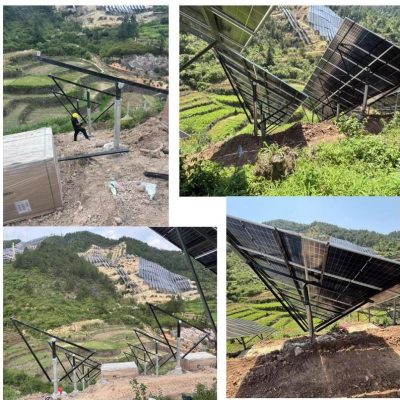
The documented advantages point to clear deployment settings for basalt fiber photovoltaic mounts. Coastal and seaport solar farms, along with installations on saline-alkali land, gain the most from corrosion and UV resistance, where steel racking would otherwise demand heavy galvanizing and frequent replacement. Utility-scale ground arrays profit from the roughly quarter-density profile, which eases foundation loads and accelerates installation while preserving the stiffness needed for tracker and fixed-tilt structures. Rooftop and carport systems benefit from the strong electrical insulation, reducing leakage-current losses and simplifying isolation from live conductors. Because the material resists fatigue and creep, it suits sites with thermal cycling and wind-induced oscillation, while its green, low-pollution origin appeals to developers with strict sustainability mandates. The main constraint remains the smaller installed base and thinner standards coverage, so early adopters should validate designs against project-specific codes.

Industry Value & Conclusion
Basalt fiber photovoltaic mounts offer a compelling, sustainability-minded alternative to steel racking, pairing low mass, low thermal expansion, and robust corrosion and insulation behavior with a 25-to-30-year service outlook in harsh settings. The performance table confirms a competent structural baseline, while the honest disadvantage—limited scale and fewer dedicated standards—frames the realistic path to broader adoption. As codes mature and track records grow, basalt composite supports are well positioned to capture share in coastal, utility, and sustainability-driven solar markets, delivering lower lifecycle cost and a smaller environmental footprint for the renewable energy industry.