 中文
中文Basalt Fiber Anti-Static Protective Clothing Enhances Safety in Power Battery Manufacturing Environments

Product Overview
Solution for Protective Clothing in Power Battery Production
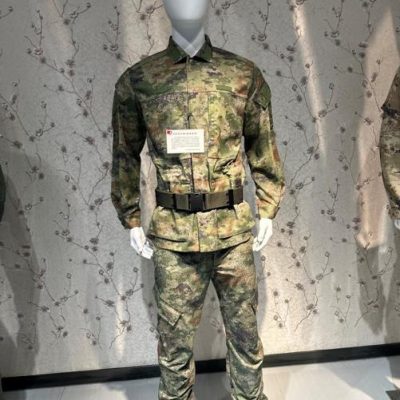
The anti-static clothing woven with basalt fiber fabric possesses characteristics such as fire
resistance, heat insulation, abrasion resistance, and static elimination.
Performance advantages:
※ Anti-static: Static electricity is eliminated through special processes to prevent the danger caused
by electrostatic sparks
※ High breathability, washable, and resistant to environmental impacts
Protection Against Extreme
Environments
In modern lithium-ion and other rechargeable battery plants, production lines concentrate flammable electrolyte solvents, fine active-material powders, and energy-dense cells within enclosed spaces. Such environments are classified as potentially explosive atmospheres where an electrostatic discharge of only modest energy can ignite solvent vapor or suspended dust, triggering fires that escalate rapidly into thermal runaway. Anti-static protective clothing therefore forms a foundational layer of intrinsic safety, complementing ventilation and grounding systems. Basalt fiber fabric brings an additional benefit: because its protective qualities are intrinsic to the mineral filament, anti-static behavior is achieved through controlled processing rather than fragile surface coatings, helping maintain compliance across the demanding duty cycle of cell and pack assembly.
Basalt fiber is a continuous filament derived from volcanic rock, extruded without synthetic binders, which gives the textile a naturally high melting point and low thermal conductivity. When engineered for static dissipation, the fabric channels accumulated charge safely away from the wearer, removing a common ignition source in solvent-rich battery lines. Its mineral origin also means the material does not readily melt or drip when exposed to heat, an important consideration where contact with hot surfaces or small fires is possible during handling and commissioning of cells.
Technical Specifications
| Characteristic | Basalt Fiber Anti-Static Clothing |
|---|---|
| Fire resistance | Possesses fire resistance as an intrinsic material property |
| Heat insulation | Provides heat insulation for thermal-event protection |
| Abrasion resistance | Abrasion-resistant construction for durable shop-floor use |
| Static elimination | Static electricity is eliminated through special processes to prevent the danger caused by electrostatic sparks |
| Breathability & washability | High breathability, washable, and resistant to environmental impacts |

Key Features & Advantages
• Anti-static: Static electricity is eliminated through special processes to prevent the danger caused by electrostatic sparks
• High breathability, washable, and resistant to environmental impacts
• Inherent thermal stability reduces garment contribution to fire spread during cell thermal events.
• Mineral-based filaments avoid melt-drip behavior that can worsen burn injuries.
• Durable construction supports repeated laundering without loss of protective function.
Application Scenarios
Protection Against Extreme
Environments
Within electrode coating, cell stacking, electrolyte filling, and final module assembly, workers benefit from garments that suppress static accumulation while remaining comfortable across long shifts. The breathable construction helps regulate heat stress in climate-controlled cleanrooms, while abrasion resistance protects against snagging on fixtures and tooling. Because battery manufacturing often pairs flammable chemistry with precision automation, clothing that resists environmental impacts and survives routine industrial washing lowers both operational risk and replacement cost. Basalt fiber anti-static apparel is suited to roles spanning process technicians, quality inspectors, and maintenance staff who move between zones with differing ignition probabilities, providing a consistent safety baseline.

Industry Value & Conclusion
For power battery manufacturers, selecting protective clothing is a decision that influences both worker safety and production continuity. Basalt fiber anti-static garments address the central hazard of electrostatic ignition while contributing fire resistance, heat insulation, and mechanical durability drawn from the mineral itself. The qualitative outcome is a safer shop floor, fewer electrostatic incidents, and a garment platform that remains dependable through repeated use. As battery demand scales and facilities adopt stricter explosive-atmosphere controls, inherently protective basalt textiles offer manufacturers a practical route to strengthen personnel safety without compromising throughput or comfort.