 中文
中文Basalt Fiber Composite Overmolding: Lightweight High-Strength Support via High-Pressure Ledge Technology
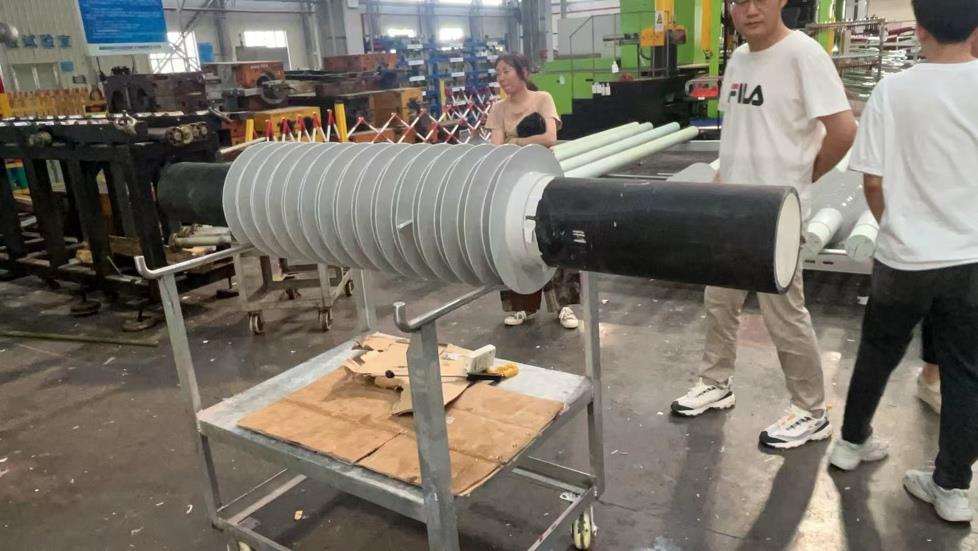
Product Overview
This page introduces a basalt composite material manufacturing route centered on overmolding and the High-Pressure Ledge of Basalt core technology. The approach enables integrally formed, lightweight structural parts that retain high mechanical performance while improving weather resistance and solving the long-standing problem of hollow internal insulation. For industrial fabricators, the process reduces secondary assembly, lowers part count, and delivers a stiff, insulating composite with consistent quality. The following verbatim source text captures the core advantages of the technology.
Stronger weather resistance
Integrated winding
lightweight support
Lightweight without compromising
mechanical performance
Lightweight and highly
insulating internal
insulation material
Solve the problem of hollow
internal insulation
Basalt Composite Material
High-Pressure Ledge of Basalt
core technology
In practice, overmolding bonds the basalt composite directly onto a substrate in a single operation, eliminating adhesive joints that can degrade in outdoor service. The integrated winding lightweight support provides structural continuity, while the insulating internal material fills cavities that would otherwise remain hollow. The result is a corrosion-resistant, thermally efficient component suited to demanding outdoor and electrical-infrastructure environments where weight reduction and durability are both required.
Technical Specifications
The table below lists the manufacturing and performance highlights of the basalt composite material as recorded in the source document.
| Feature / Process | Description |
|---|---|
| Overmolding | Single-step molding of the basalt composite onto the substrate |
| Stronger weather resistance | Improved durability against outdoor environmental exposure |
| Integrated winding lightweight support | Continuous structural reinforcement with minimized mass |
| Lightweight without compromising mechanical performance | Mass reduction while preserving load-bearing capability |
| Lightweight and highly insulating internal insulation material | Low-density core with strong thermal insulation |
| Solve the problem of hollow internal insulation | Eliminates voids in internal insulating cavities |
| Basalt Composite Material | Base reinforced composite system |
| High-Pressure Ledge of Basalt core technology | Proprietary high-pressure forming process |

Key Features & Advantages
• Overmolding consolidates multiple production steps into one bonded operation for higher yield.
• Stronger weather resistance extends service life in humid, sunny, and temperature-cycling environments.
• Integrated winding lightweight support delivers rigid, continuous reinforcement with low added mass.
• Mechanical performance is preserved even as overall component weight is reduced.
• The highly insulating internal material improves thermal efficiency of enclosed structures.
• Hollow internal insulation problems are eliminated, removing weak points and heat-bridge paths.
Application Scenarios
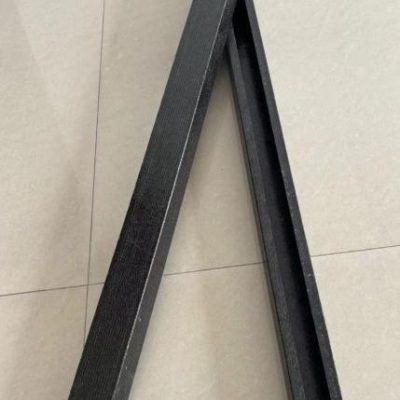
The basalt composite overmolding process is well matched to electrical and utility structures such as crossbars, insulators, and support arms, where lightweight stiffness and weather resistance are essential. Transportation and rail sectors can adopt the technology for interior panels and enclosures that need thermal insulation without added weight. In building and infrastructure, integrally molded basalt components serve as durable, corrosion-proof alternatives to metal brackets and frames exposed to the elements. The ability to fill previously hollow cavities with insulating material also benefits HVAC ducts, enclosures, and equipment housings that must limit heat transfer. Because the process reduces part count, it simplifies supply chains for OEMs producing medium- to high-volume composite assemblies.
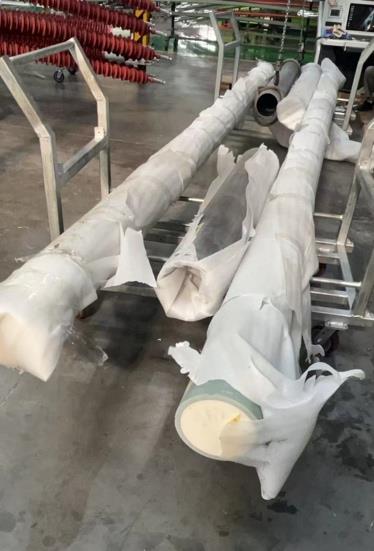
Industry Value & Conclusion
The High-Pressure Ledge of Basalt core technology reframes how basalt composite parts are manufactured, shifting from multi-piece assemblies to integrally overmolded, lightweight, and weather-resistant structures. For B2B fabricators and end-users, the value lies in lower lifecycle cost through reduced weight, fewer joints, and longer outdoor durability, together with improved thermal insulation from fully filled internal cavities. As industries prioritize decarbonization and material efficiency, basalt fiber composites offer a sustainable, high-performance alternative to steel and aluminum in non-primary structural roles. Adopting this overmolding route positions suppliers to meet growing demand for lightweight, insulating, and environmentally robust composite components.