 中文
中文Basalt Fiber Composite Crossbar: Qualified Performance Testing of High-Pressure Structural Components
Product Overview
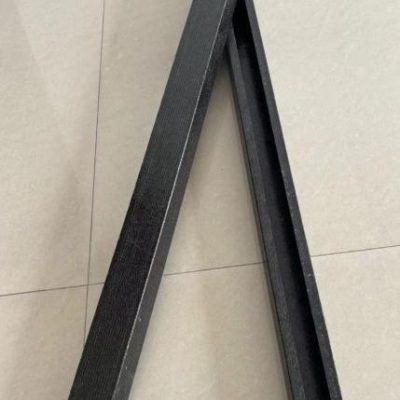
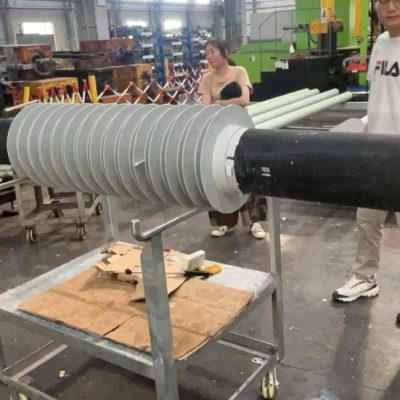
This page documents the qualification test program for high-pressure crossbars produced from basalt composite material. A full battery of appearance, electrical, thermal, and interfacial tests was performed to verify that the molded component meets specification and outperforms solid counterparts in selected properties. The results confirm readiness for demanding structural and electrical-insulation service. The verbatim test record below preserves every conclusion and remark as originally reported.
Test Name
Conclusion
remark
Appearance and dimensions
qualified
/
water absorption rate
qualified
Better than solid
Core material
Barcol hardness
qualified
/
dye penetration
qualified
/
Water diffusion
qualified
Better than solid
Thermal induction
qualified
/
AC breakdown strength
qualified
Better than solid
Crimp performance test
qualified
/
Injection process validation
qualified
/
Interface
performance
verification after
bending load
Interface appearance
qualified
/
dye penetration
qualified
/
AC breakdown strength
qualified
/
Heat induction
qualified
/
Water diffusion
qualified
/
Basalt Composite Material
Performance Testing of High-Pressure Crossbars in Basalt
Every tested attribute returned a “qualified” result, and three properties—water absorption rate, water diffusion, and AC breakdown strength—were explicitly noted as “Better than solid.” This indicates that the basalt composite crossbar not only satisfies baseline requirements but also surpasses traditional solid materials where moisture resistance and dielectric strength matter most. The interface verification after bending load further confirms that bonded regions remain intact under mechanical flexure, a critical assurance for field reliability.
Technical Specifications
The following table reproduces the performance testing of high-pressure crossbars in basalt, with all conclusions and remarks verbatim.
| Test Type | Test Name | Conclusion | remark |
|---|---|---|---|
| Appearance and dimensions | / | qualified | / |
| water absorption rate | / | qualified | Better than solid |
| Core material | Barcol hardness | qualified | / |
| Core material | dye penetration | qualified | / |
| Water diffusion | / | qualified | Better than solid |
| Thermal induction | / | qualified | / |
| AC breakdown strength | / | qualified | Better than solid |
| Crimp performance test | / | qualified | / |
| Injection process validation | / | qualified | / |
| Interface performance verification after bending load | Interface appearance | qualified | / |
| Interface performance verification after bending load | dye penetration | qualified | / |
| Interface performance verification after bending load | AC breakdown strength | qualified | / |
| Interface performance verification after bending load | Heat induction | qualified | / |
| Interface performance verification after bending load | Water diffusion | qualified | / |

Key Features & Advantages
• All inspected attributes passed, confirming consistent manufacturing quality.
• Water absorption rate and water diffusion are better than solid, aiding long-term outdoor stability.
• AC breakdown strength is better than solid, supporting reliable electrical-insulation duty.
• Interface integrity is maintained after bending load, proving durable bonded joints.
• Crimp and injection process validation confirm repeatable, production-ready forming.
• Core material hardness and penetration checks verify a sound, homogeneous composite body.
Application Scenarios
Qualified basalt composite crossbars are intended for electrical transmission and distribution hardware, where high dielectric strength and low moisture uptake prevent tracking and aging in outdoor service. Rail and transit operators can use them for lightweight, non-conductive support structures that resist corrosion without painting or galvanizing. Renewable-energy installations, such as solar and wind balance-of-system frameworks, benefit from the combination of stiffness, insulation, and weather durability. Because the interface survives bending loads, the crossbars suit applications with vibration or periodic mechanical stress. Procurement teams specifying composite insulators and spacers can treat these test results as evidence of field-readiness across thermal, electrical, and environmental conditions.

Industry Value & Conclusion
The comprehensive qualification of high-pressure crossbars in basalt demonstrates that basalt fiber composites have moved from material curiosity to validated structural product. Passing every appearance, electrical, thermal, and interfacial test—with several metrics exceeding solid-material baselines—gives utilities and OEMs the confidence to specify basalt composite components in safety-relevant roles. Beyond performance, basalt offers a lower-carbon, abundantly sourced reinforcement that supports sustainability targets without sacrificing reliability. For the composites industry, these results reinforce basalt fiber’s position as a cost-competitive, high-performance choice for next-generation insulating and lightweight structural hardware.