 中文
中文Basalt Fiber vs Aramid and Glass: Stealth Fabric Thermal Insulation and Infrared Camouflage Performance
Product Overview
This page presents a direct, side-by-side evaluation of four representative protective textile systems for thermal-insulation and infrared-stealth applications. The comparison positions basalt fiber against aramid 1414, Nomex, and conventional glass fiber flame retardant fabric, measuring how each material performs when used as a body-surface camouflage and thermal-protection layer. In modern personal protection and vehicle concealment programs, the ability to suppress a detectable thermal signature while maintaining wearability is decisive. Basalt fiber fabric demonstrates a compelling balance of low thermal conductivity, low infrared emissivity, and a wide service-temperature envelope, making it a strong candidate for next-generation stealth clothing and equipment covers.
Aramid 1414
Nomex
Glass fiber flame
retardant fabric
thermal insulation
performance
0.038W/(m・K), excellent
thermal insulation
performance, body surface
temperature ≤45℃
0.035W/(m・K), excellent
heat insulation, body
surface temperature ≤42℃
0.040W/(m・K), with good
thermal insulation
properties, and a body
surface temperature of
≤48℃
0.045W/(m・K), with
general heat insulation
performance, and a body
surface temperature of
≤52℃
infrared emissivity
(8-14μm wavelength band)
0.25-0.35, low emissivity,
weak thermal signal, and a
60% reduction in detection
range of thermal imaging
devices
0.30-0.40, low emissivity,
weak thermal signal,
detection range reduced by
50%
0.32-0.42, medium-low
emissivity, detection range
reduced by 45%
0.45-0.55, medium-high
emissivity, strong thermal
signal, detection distance
shortened by only 20%
Thermal signal camouflage
Temperature difference
≤3℃, excellent camouflage
performance
Temperature difference
≤4℃, good camouflage
performance
Temperature difference
≤5℃, with medium
camouflage capability
Temperature difference ≤
6℃, poor camouflage,
easily detected by thermal
imaging
Stability against infrared
detection
Under 500℃radiation,
there is no significant
increase in infrared
emissivity, maintaining
stealth
Stable below 450℃, with a
slight increase in emissivity
after exceeding the
temperature threshold
Stable below 400℃, with
reduced camouflage
performance after
exceeding the temperature
threshold
Stable below 350℃, with
emissivity soaring after
exceeding the temperature
threshold
Resistant to harsh
environments (high and
low temperatures / damp
heat / dust and sand)
-40℃~260℃
-30℃~220℃
-30℃~200℃
-10℃~180℃
weight
230-250g/㎡
200-220g/㎡
210-230g/㎡
190-210g/㎡
Comparison of Stealth Material Performance
Protection Against Extreme
Environments
As the source data shows, basalt fiber delivers the widest stable infrared-detection window (up to 500℃ radiation) and the broadest harsh-environment tolerance range (-40℃~260℃), while keeping fabric weight competitive at 230-250g/㎡. The combination of a low 0.25-0.35 emissivity in the 8-14μm atmospheric window and a 60% reduction in thermal-imaging detection range underscores its camouflage value. Procurement teams evaluating stealth textiles should weigh these figures against aramid and glass alternatives to optimize detection avoidance versus cost and durability.
Technical Specifications
The table below reproduces the original comparison of stealth material performance across all four fabrics, preserving every parameter exactly as recorded.
| Performance Metric | Basalt fiber | Aramid 1414 | Nomex | Glass fiber flame retardant fabric |
|---|---|---|---|---|
| thermal insulation performance | 0.038W/(m・K), excellent thermal insulation performance, body surface temperature ≤45℃ | 0.035W/(m・K), excellent heat insulation, body surface temperature ≤42℃ | 0.040W/(m・K), with good thermal insulation properties, and a body surface temperature of ≤48℃ | 0.045W/(m・K), with general heat insulation performance, and a body surface temperature of ≤52℃ |
| infrared emissivity (8-14μm wavelength band) | 0.25-0.35, low emissivity, weak thermal signal, and a 60% reduction in detection range of thermal imaging devices | 0.30-0.40, low emissivity, weak thermal signal, detection range reduced by 50% | 0.32-0.42, medium-low emissivity, detection range reduced by 45% | 0.45-0.55, medium-high emissivity, strong thermal signal, detection distance shortened by only 20% |
| Thermal signal camouflage | Temperature difference ≤3℃, excellent camouflage performance | Temperature difference ≤4℃, good camouflage performance | Temperature difference ≤5℃, with medium camouflage capability | Temperature difference ≤6℃, poor camouflage, easily detected by thermal imaging |
| Stability against infrared detection | Under 500℃radiation, there is no significant increase in infrared emissivity, maintaining stealth | Stable below 450℃, with a slight increase in emissivity after exceeding the temperature threshold | Stable below 400℃, with reduced camouflage performance after exceeding the temperature threshold | Stable below 350℃, with emissivity soaring after exceeding the temperature threshold |
| Resistant to harsh environments (high and low temperatures / damp heat / dust and sand) | -40℃~260℃ | -30℃~220℃ | -30℃~200℃ | -10℃~180℃ |
| weight | 230-250g/㎡ | 200-220g/㎡ | 210-230g/㎡ | 190-210g/㎡ |

Key Features & Advantages
• Basalt fiber provides a low and stable infrared emissivity that weakens the thermal signature in the 8-14μm atmospheric window.
• The fabric sustains stealth performance under 500℃ radiation, the widest stable infrared window among the compared materials.
• Excellent thermal insulation keeps body-surface temperature low, reducing detectable heat contrast against the background.
• Broad environmental tolerance from -40℃ to 260℃ supports deployment in extreme hot, cold, damp, and dusty conditions.
• Competitive areal weight supports comfortable, wearable concealment without excessive bulk for field personnel.
• Superior camouflage margins versus glass and aramid reduce the probability of detection by thermal-imaging devices.
Application Scenarios
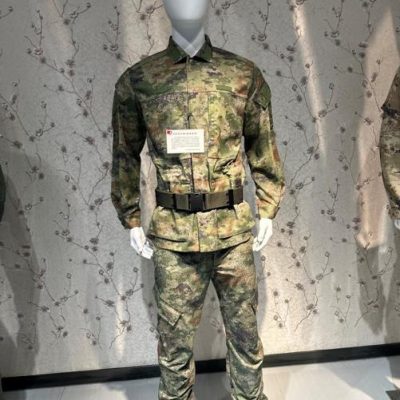
Basalt fiber stealth fabric is well suited to personal protective clothing for reconnaissance and special-operations personnel, where minimizing infrared detectability is critical. It can be applied as an outer camouflage layer on vehicles, shelters, and equipment covers to reduce thermal-contrast signatures observed by airborne or handheld thermal imagers. The material’s stable performance under sustained radiant heat makes it valuable for proximity-to-engine and exhaust-shield applications, while its wide temperature tolerance supports use from arctic to desert theaters. Industrial operators in high-radiation or high-heat environments can adopt the fabric for protective garments that also lower accidental thermal detection. Its balanced weight and insulation profile allow integration into multi-layer systems without compromising mobility.

Industry Value & Conclusion
Within the protective-textile and defense-supply chain, basalt fiber offers a differentiated value proposition: it combines low thermal conductivity, low infrared emissivity, and robust environmental stability at a competitive weight, outperforming glass fiber and narrowing the gap with premium aramid and Nomex systems on camouflage-critical parameters. For manufacturers and procurers building the next generation of thermal-stealth apparel and covers, basalt fiber represents a technically credible and increasingly cost-effective route to enhanced detection avoidance. Its maturity as a continuous-filament reinforcement further supports scalable, reproducible production for industrial programs demanding consistent stealth performance.