 中文
中文Basalt Fiber vs Aramid and Stainless Steel: Electric Power Protective Clothing Performance Comparison
Product Overview
Electric power protective clothing must satisfy a uniquely demanding set of requirements: it must shield workers from electromagnetic fields, resist electrical breakdown, tolerate wide temperature swings, and remain comfortable enough for full-shift wear. Basalt fiber fabric has emerged as a strong candidate because its inorganic, heat-stable nature supports both shielding and thermal protection within a single lightweight textile system.
Specifiers typically evaluate basalt fiber against aramid fiber, polyethylene, stainless steel fiber blended fabrics, and fiberglass. Each option balances shielding efficiency, surface resistivity, breakdown strength, operating temperature range, and weight differently. For utility safety managers, the objective is to select a material that delivers certified field shielding while minimizing wearer fatigue and long-term program cost.
The following comparison reproduces the source performance data across these five materials. The qualitative context explains how the measured differences translate into real-world protection value for live-line and substation personnel, without altering any technical parameter.
Technical Specifications
Performance Comparison of Electric Power Protective Clothing

| Property | Basalt fiber | Aramid fiber | Polyethylene | Stainless steel fiber blended |
Fiberglass |
|---|---|---|---|---|---|
| Shielding efficiency |
≥40dB (power frequency 50Hz), It maintains a level of over 35dB at high frequencies, with uniform electric field shielding |
≥40dB (power frequency 50Hz), The high-frequency shielding performance has slightly decreased, approximately to 30-35dB |
≥38dB (power frequency 50Hz), High-frequency shielding attenuates rapidly |
≥45dB (power frequency / high frequency), Optimal shielding performance with no significant attenuation |
≥35dB (power frequency 50Hz), poor high- frequency shielding, prone to local weak shielding |
| Surface resistivity | Meets the requirements of the national standard, stable conductivity |
Within the scope of national standards, There are slight fluctuations in temperature and humidity changes |
Close to the lower limit of the national standard, The resistivity slightly increases at low temperatures |
The resistivity is the lowest, Optimal conductivity |
Some operating conditions are close National standard threshold |
| Electrical breakdown insulating substrate strength |
≥20kV/mm, | ≥18kV/mm, | Good breakdown resistance, Slight decrease under high temperature |
≥22kV/mm, The breakdown strength is optimal, Outstanding insulation performance |
≥15kV/mm, The proportion of metal fibers is high, The resistance to breakdown is relatively weak |
| Operating temperature range |
-20℃~260℃, Excellent high temperature resistance, Not embrittling at low temperatures |
-20℃~220℃, It has good heat resistance, It begins to soften at temperatures above 200℃ |
-50℃~100℃, The best resistance to low temperatures, Easy to soften and deform at high temperatures |
-40℃~150℃, Metal fibers conduct heat quickly, High temperature may cause skin burns, Low temperature has no effect |
-10℃~180℃, It becomes brittle at low temperatures, Prone to aging at high temperatures |
| Light, Lighter, quality |
Light, Lighter, About 180-200g/㎡, The most comfortable sensation |
Light, About 170-190g/㎡, the lightest quality, no restriction when wearing |
Heavy, Lighter, About 200-220g/㎡, |
About 300-350g/㎡, | About 190-210g/㎡, |
quality
Wearing it is
High proportion of metal
However, it is quite
lightweight, with no
fibers leads to fatigue over
fragile, so be careful when
heavy feeling
time
wearing it

Protection Against Extreme
Environments
Key Features & Advantages
• Stable shielding efficiency at both power and high frequencies.
• Surface resistivity that meets national standards with consistent conductivity.
• Strong electrical breakdown resistance combined with reliable insulation.
• Wide operating temperature range without low-temperature embrittlement.
• Lightweight construction supporting wearer comfort across long shifts.
• Inorganic, heat-stable composition advantageous for electric utility environments.
Application Scenarios
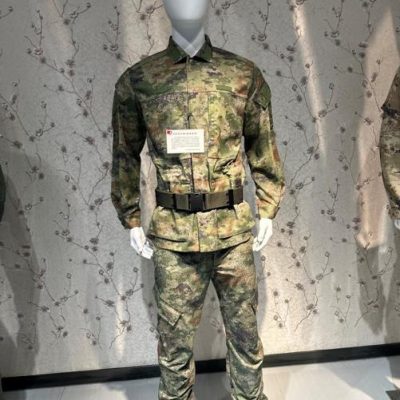
Basalt fiber electric power protective clothing is specified for live-line maintenance, substation operations, and switchyard work where field shielding and thermal safety are both mandatory. Its balanced shielding efficiency protects crews on energized circuits, while the wide operating temperature range supports use across seasonal extremes without material embrittlement.
Compared with stainless steel fiber blended alternatives, basalt fabric avoids the heat-conduction discomfort and fatigue associated with high metal-fiber content, making it better suited to extended wear. Relative to polyethylene, it sustains shielding at high frequencies and tolerates higher operating temperatures. These attributes position basalt fiber as a versatile choice for utilities standardizing a single protective garment across diverse field tasks.
Protection Against Extreme Environments defines the operating envelope: basalt fiber garments are engineered for the combined electrical, thermal, and mechanical stresses encountered by electrical workers in the field.
Industry Value & Conclusion
Basalt fiber offers electric power utilities a well-rounded protective clothing solution that reconciles shielding performance, breakdown resistance, thermal stability, and wearer comfort. Its advantages are most valuable where crews face simultaneous electromagnetic and thermal hazards during live-line and substation operations. As grid maintenance intensifies, basalt fiber based protective clothing provides a durable, standards-aligned foundation for safeguarding electrical workers.