 中文
中文Basalt Fiber vs Aramid and Polyimide: Fire-Fighting Clothing Performance Comparison
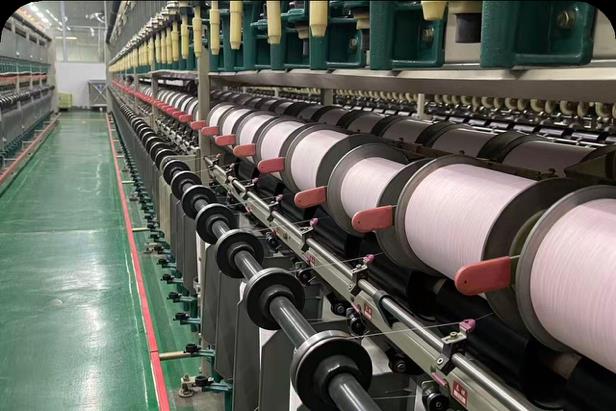
Product Overview
Basalt fiber is a continuous mineral filament produced by melting and extruding natural volcanic basalt rock at high temperature. Because the flame resistance of basalt fiber is an intrinsic property of the inorganic material itself, it does not rely on chemical finishing agents or additive loading to achieve its protective behaviour. This makes the fiber especially attractive for fire-fighting clothing, where durability after repeated washing, thermal stability, and low environmental impact are decisive purchasing criteria for industrial procurement teams.
In the global personal protective equipment market, purchasers routinely benchmark basalt fiber against aramid, polyimide, and flame-retardant cotton blended fabrics. Each material brings a different balance of heat resistance, tensile strength, moisture management, weight, and sustainability. For fire-service procurement and industrial safety officers, understanding where basalt fiber holds a decisive advantage helps rationalize specifications and total cost of ownership across multi-year garment programs.
The comparison below outlines how basalt fiber performs relative to aramid, polyimide fiber, and flame-retardant cotton blended material across the parameters that matter most in structural firefighting and industrial heat-exposure scenarios. The qualitative background is intended to support specification decisions, while the technical values are reproduced exactly from source documentation.
Technical Specifications
Comparison of Fire-fighting Clothing Performance

| Property | Basalt fiber | Aramid | Polyimide fiber | Flame-retardant cotton blended material |
|---|---|---|---|---|
| Ultimate temperature tolerance |
Up to 900℃or higher | 300-400℃ | Generally high | Rely on flame retardant additives |
| Flame retardancy retention after washing |
High, with long-lasting and stable performance |
High, specially treated | If it is high, it must undergo coating treatment |
Moderate, decreases with the number of washes |
| Tensile strength (MPa) | 3300-4500 | Kevlar can reach over 3600, while Nomex is lower |
higher | Relying on the blending ratio, which is usually low |
| Water vapor transmission rate (g/m²·24h) |
≥5000 | Depending on the coating treatment, it is generally good |
Depending on the coating treatment, it is relatively high |
higher |
| hydrostatic pressure (mmH2O) |
High waterproofness can be achieved through coating treatment |
High, enhanced through coating treatment |
Depending on the coating treatment, it is high |
Relying on coating treatment may result in lower performance |
| Weight (g/m²) | Relatively light, with specific values varying depending on the product |
Moderate to relatively heavy, depending on the fiber type |
lighter | Similar to ordinary cotton, but heavier |
| Pollution during the production process |
Non-polluting or low-polluting, and biodegradable |
Relatively environmentally friendly, but some chemicals require attention |
It is relatively environmentally friendly, depending on the process |
Containing harmful dyes, difficult to recycle |
| wear resistance | Low, wear-resistant, and long service life |
Moderate, depending on usage frequency and maintenance |
lower | Relatively high, relying on the persistence of additives |

Protection Against Extreme
Environments
Key Features & Advantages
• Inherent, additive-free flame resistance that is stable through repeated laundering cycles.
• Superior ultimate temperature tolerance relative to organic fiber alternatives.
• Strong tensile strength supporting durable, long-service-life garment construction.
• Low-polluting, biodegradable production profile aligned with sustainable procurement goals.
• Effective moisture vapor transport that supports wearer comfort during extended thermal exposure.
Application Scenarios
Basalt fiber protective fabrics are deployed wherever personnel face intense radiant and convective heat. Structural firefighters rely on the material’s high ultimate temperature tolerance for turnout and proximity gear. Industrial users specify basalt-based layers for foundry work, molten-metal handling, glass manufacturing, and welding protection, where sustained heat and spark exposure demand stable flame retardancy without dependence on coatings that degrade over time.
In petrochemical and energy-sector maintenance, basalt fiber clothing is valued for combining thermal protection with wearer comfort during long shifts. Because flame retardancy is retained after washing, garment programs achieve predictable performance across the full service life, reducing the risk of premature retirement due to compromised protection. The material’s lower environmental footprint further supports corporate sustainability reporting for safety-equipment procurement.
Protection Against Extreme Environments remains the central design driver: basalt fiber garments are engineered to shield wearers from the most demanding thermal and fire-exposure conditions encountered in emergency response and heavy industry.
Industry Value & Conclusion
For fire-fighting and industrial heat-protection programs, basalt fiber delivers a compelling combination of intrinsic flame resistance, thermal durability, mechanical strength, and environmental responsibility. Its performance advantage is most pronounced where washing stability and ultimate temperature tolerance are non-negotiable. As safety standards tighten and lifecycle cost becomes a central procurement metric, basalt fiber protective clothing offers specifiers a technically robust, sustainable pathway to long-term personnel protection.