 中文
中文Basalt Fiber Cloth Applications Across Engineering Thermal Insulation and Composite Material Fields
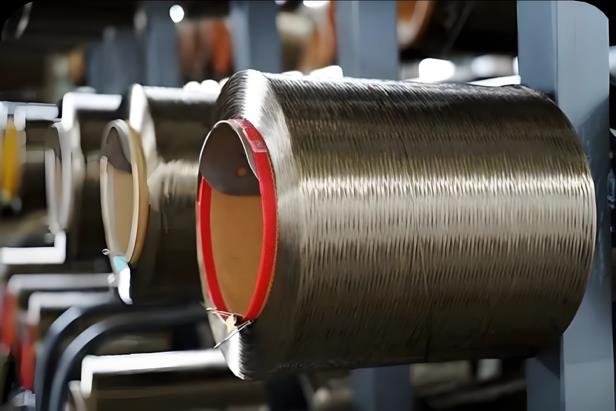
Product Overview
Application of Basalt Fiber Cloth
It is widely used in various fields such as engineering, thermal insulation, and composite materials.
Basalt fiber cloth is a woven fabric manufactured from continuous basalt filaments, delivering an exceptional balance of mechanical strength, thermal stability, and chemical resistance within a single lightweight textile. As a mineral-based reinforcement, it provides engineers and specifiers with a non-combustible, rot-proof, and electrically insulating substrate that performs reliably across demanding service environments. The cloth is supplied in multiple weave styles and areal weights, allowing it to be selected for surface protection, structural wrapping, and laminate reinforcement without compromising handling or drapability. In engineering works, basalt fiber cloth is frequently applied to strengthen concrete and masonry, to protect pipelines and tanks, and to form durable anti-corrosion barriers in aggressive industrial atmospheres. Within thermal insulation systems, the fabric retains dimensional stability at elevated temperatures, making it suitable for furnace curtains, welding blankets, and expansion-joint covers. As a composite material, the cloth integrates with resin matrices to produce panels, shells, and profiles that combine stiffness with impact toughness. Its inert mineral origin also supports sustainable construction and equipment-design strategies by reducing dependence on synthetic or resource-intensive reinforcements. With consistent quality and broad compatibility, basalt fiber cloth has become a practical, cost-effective choice for contractors, OEMs, and maintenance teams seeking long-service-life performance in both new-build and retrofit projects.
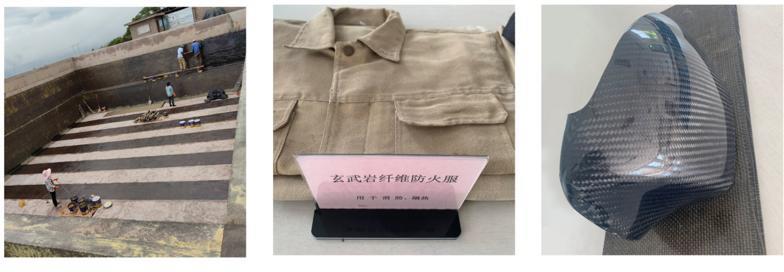
Technical Specifications
Basalt fiber cloth is produced from continuous basalt fibers and is characterized by its inorganic, high-temperature-resistant composition. The fabric is differentiated from glass and aramid textiles by its naturally high silica and alumina content, which contributes to stable performance under thermal cycling and chemical exposure. Selection is typically guided by weave type, areal weight, and filament diameter to match the target application. The cloth supplied under the basalt fiber product range is engineered for compatibility with standard impregnation, coating, and lamination processes, supporting both field fabrication and factory production. Refer to the product series documentation for available grades and finishing options.

Key Features & Advantages
• Anticorrosion
• Protection
• Composite materials
• Inherently non-combustible and rot-proof for long-term durability in harsh conditions.
• Electrically non-conductive, supporting safe use near live equipment and in insulating systems.
• Good drapability and conformability to complex or curved surfaces during wrapping and lay-up.

Application Scenarios
It is widely used in various fields such as engineering, thermal insulation, and composite materials.
In civil and structural engineering, basalt fiber cloth is applied as an externally bonded reinforcement for beams, columns, and slabs, improving load capacity and extending service life where conventional repair is impractical. In thermal insulation, the cloth forms the substrate for welding blankets, furnace curtains, and pipe-cover systems that must withstand repeated heat exposure without degrading. Within composite materials, the fabric is laminated with polyester, vinyl ester, or epoxy resins to manufacture lightweight panels, tanks, and transport components that demand stiffness with corrosion resistance. Maintenance teams use the cloth to wrap vulnerable joints and flanges, creating a protective shield against moisture, chemicals, and abrasion. Its versatility also supports niche uses such as geothermal and marine structures, where long-term durability in aggressive media is essential. By spanning engineering, insulation, and composites, basalt fiber cloth enables standardized specification across multiple disciplines while simplifying inventory and training for procurement and installation crews.
Industry Value & Conclusion
Basalt Fiber Products
Basalt fiber cloth delivers measurable value across the construction, energy, and manufacturing sectors by consolidating corrosion protection, thermal management, and structural reinforcement into one mineral-based textile. Its long service life reduces recurring maintenance and replacement cost, while its inert composition supports safer, lower-emission specifications compared with synthetic alternatives. For engineering contractors, insulation specialists, and composite fabricators, the cloth offers a dependable, easy-to-source material that performs consistently from prototype to full-scale deployment, strengthening overall project reliability and lifecycle economy.