 中文
中文Basalt Fiber Cloth: Plain, Twill, Satin and Multi-Axial Weave Specifications for Industry
Product Overview
Basalt Fiber Cloth
Basalt fiber cloth is woven from continuous basalt untwisted yarn or twisted yarn, and can be made into different thicknesses, weights, warp and weft densities, widths, etc. according to needs. It has the advantages of high strength, high temperature resistance, corrosion resistance, no toxic gas emission, good thermal insulation, non-flammable, flame retardant and smokeless, and no thermal shrinkage phenomenon.
Basalt fiber cloth is a woven reinforcement that brings the inherent stability of continuous basalt filaments into a drapable, two-dimensional textile form. Because the yarns are woven rather than chopped, the cloth preserves a high proportion of the original fiber strength and offers predictable load transfer in both warp and weft directions. The ability to tune thickness, areal weight, and weave architecture means a single material family can serve everything from thin surfacing layers to heavy structural laminates. Its mineral composition delivers performance that remains stable at elevated temperatures and in chemically aggressive surroundings, which is difficult to achieve with organic textiles. For composite fabricators, basalt fiber cloth is straightforward to handle, cut, and laminate, and it bonds reliably with polyester, vinyl ester, and epoxy resin systems. The cloth is also valued where occupant safety is regulated, since it does not emit toxic gas and remains non-flammable and smokeless when exposed to fire. These attributes make it a practical, lower-risk alternative to glass or aramid cloth in many structural, thermal, and protective applications where long service life and consistent quality are priorities.
Technical Specifications
Common specifications of basalt fiber cloth

| organizational structure | Fiber diameter (um) | Area density (g/㎡) | Width (mm) |
|---|---|---|---|
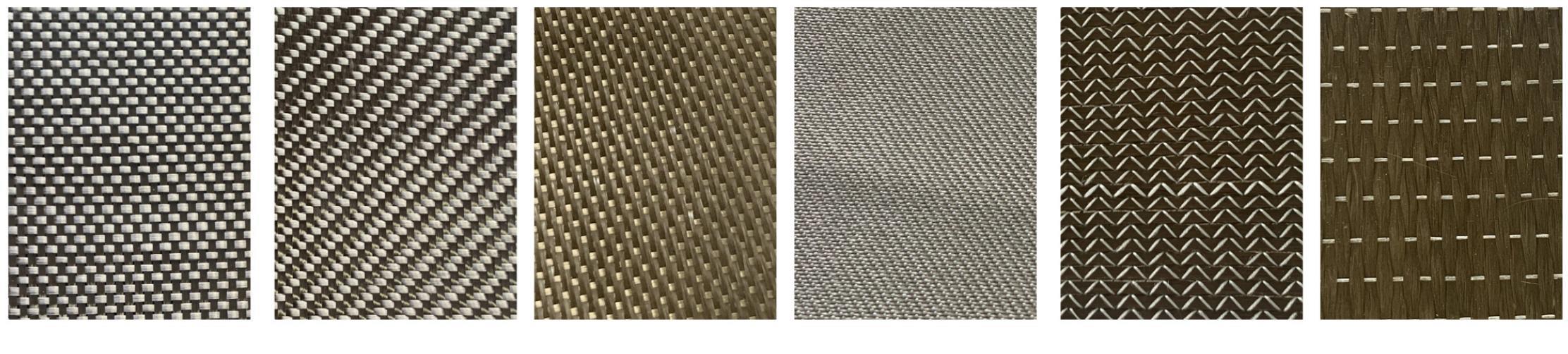
| plain weave | 9-16 | 100/200/300/600 | 560-1500 |
| twill | — | 200/300/600/900 | 1000-1400 |
| satin weave | 320 | 1270 | — |
| multi-axial | — | 350/450/680 | 1270 |
| one-way | — | 200/300 | 1000-1500 |
| Aramid basalt blended fabric | — | — | — |
Multi-axial | One way | Plain weave fabric | Twill weave fabric | Satin weave fabric | Basalt Fiber Products
Key Features & Advantages
• High strength for structural composite laminates.
• High temperature resistance across demanding service conditions.
• Corrosion resistance in aggressive chemical and marine environments.
• No toxic gas emission when exposed to fire.
• Good thermal insulation for heat-management assemblies.
• Non-flammable, flame retardant and smokeless for occupant safety.
• No thermal shrinkage phenomenon, preserving dimensional accuracy.
• Drapable weave formats that conform to complex mold geometries.
Application Scenarios
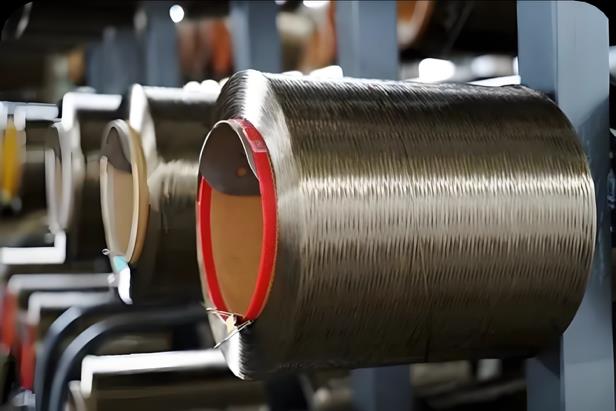
Basalt fiber cloth is specified wherever a drapable, high-strength, and fire-safe textile reinforcement is required. In structural composites, plain and twill weaves provide balanced bidirectional strength for panels, enclosures, and load-bearing shells, while satin weave offers superior drape for contoured tooling and complex molds. Multi-axial and one-way constructions are selected when directional stiffness or high fiber alignment is needed, such as in lightweight beams and spars. The cloth is widely used in transportation, energy, and construction components that must perform under heat, corrosion, or fire exposure. In protective and insulation systems, its non-flammable, smokeless behavior supports safer enclosed environments, and its lack of thermal shrinkage helps maintain fit and dimensional accuracy over service life. Because the material is compatible with standard resin systems and conventional laminating methods, fabricators can adopt it without retooling, and the availability of multiple weave architectures lets engineers optimize each layer for strength, conformability, or surface finish. This versatility explains why basalt fiber cloth is increasingly chosen as a dependable alternative to glass and aramid textiles across industrial programs.
Industry Value & Conclusion
Basalt fiber cloth delivers a compelling combination of strength, thermal stability, and fire safety from a naturally derived mineral base, giving manufacturers a single reinforcement family that spans plain, twill, satin, multi-axial, and one-way formats. Its predictable quality and process compatibility reduce qualification effort and support repeatable, scalable production. As industries push toward lighter, safer, and more sustainable structures, basalt fiber cloth offers a strategic balance of performance and responsibility that is difficult to match with conventional textiles. For B2B buyers, specifying basalt fiber cloth means gaining reliable mechanical reinforcement together with corrosion resistance, thermal insulation, and smokeless fire behavior, all while advancing environmental objectives. This positions basalt fiber cloth as a forward-looking, cost-effective choice for the next generation of composite and protective systems.