 中文
中文Basalt Fiber Mat Specifications: Needled, Chopped Strand and Surfacing Mat for Composites
Product Overview
Basalt Fiber Mat
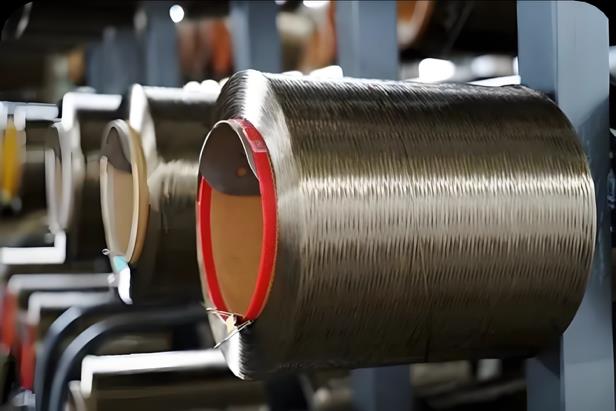
Basalt fiber mat is made from basalt chopped fibers through processes such as needle punching, binder compounding, and wet papermaking.
Basalt fiber mat represents a versatile non-woven reinforcement engineered for composite manufacturing, thermal and acoustic insulation, and surface protection systems. By converting continuous basalt filaments into chopped fibers and then consolidating them through mechanical needling or bonding, the material achieves a three-dimensional fibrous network that distributes load efficiently while remaining conformable to complex mold geometries. The naturally inert mineral chemistry of the fibers makes the mat especially suitable for applications demanding long-term durability in aggressive or outdoor environments. In composite tooling and lightweight structural parts, basalt fiber mat contributes reinforcement without the conductivity or galvanic-corrosion concerns associated with metallic alternatives. Its stable chemical structure also supports use in filtration and lining systems where thermal endurance and chemical inertness are decisive selection factors. Procurement teams value the mat for its predictable batch-to-batch consistency, which simplifies process qualification and reduces production scrap. Across infrastructure, transportation, and energy programs, basalt fiber mat is increasingly selected as a sustainable reinforcement that combines performance with a lower embodied-energy profile than many fully synthetic alternatives. Because the mat is supplied in several process variants, engineers can match the form to the manufacturing method, whether that is hand lay-up, press molding, or continuous automated production.
Technical Specifications
Common specifications of basalt fiber mat

| Product Type | Specification | Value |
|---|---|---|
| needle felt | thickness (mm) | 4-25 |
| needle felt | Test weight (kg/m³) | 110-160 |
| needle felt | Width (cm) | 12-300 |
| Chopped strand mat | Area density (g/㎡) | 300/350 |
| Chopped strand mat | Width (cm) | 104/127 |
| Chopped strand mat | adhesive | Powder formulation |
| Surface felt | Area density (g/㎡) | 30/40/50/100 |
| Surface felt | Width (cm) | 100 |
| Surface felt | adhesive | Emulsion type |
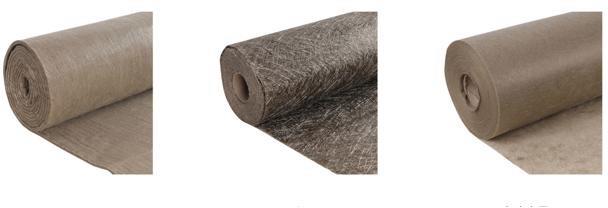
Needled Mat | Chopped Strand Mat | Surfacing Mat | Basalt Fiber Products
Key Features & Advantages
• Manufactured from naturally sourced basalt rock with consistent, inert fiber chemistry.
• Deterministic needle-punch and wet-forming processes deliver uniform areal weight and stable geometry.
• Compatible with polyester, vinyl ester, and epoxy resin systems for composite laminates.
• Non-combustible and low-smoke by nature, supporting fire-safe construction assemblies.
• Resistant to most acids, alkalis, and solvents across industrial service environments.
• Dimensionally stable with negligible thermal shrinkage under elevated operating temperatures.
• Conformable to curved and irregular substrates for hand lay-up and molded parts.
• Lower embodied energy than many fully synthetic reinforcement mats.
Application Scenarios

Basalt fiber mat is deployed across a broad spectrum of industrial and commercial scenarios where reinforcement, insulation, or surface finishing is required. In marine and shipbuilding assemblies, the mat is laminated into hulls and bulkheads to improve impact resistance while limiting weight gain. Within automotive interior components, it serves as a backing and damping layer that suppresses vibration and contributes to cabin comfort. In new energy battery systems, basalt mats are used as thermal-barrier and insulation layers that help manage heat propagation between cells. The material also finds use in building panels, roofing membranes, and pipeline wrap where corrosion resistance and fire performance are specified. Because the mat conforms readily to curved surfaces, it is well suited to hand lay-up, press molding, and continuous process lines. Specifiers appreciate the flexibility to select needled, chopped strand, or surfacing variants depending on whether the priority is structural reinforcement, resin distribution, or a smooth finished surface. Surfacing mat in particular yields a clean, pinhole-free gel-coat interface, while chopped strand mat accelerates resin wet-out, and needle felt provides bulk and dimensional stability for thick laminates.
Industry Value & Conclusion
The adoption of basalt fiber mat reflects a wider shift toward mineral-based, high-performance materials that reduce lifecycle cost without compromising safety or sustainability targets. Its naturally derived composition, combined with manufacturable forms spanning needle felt, chopped strand mat, and surfacing mat, gives engineers a single-source reinforcement family for diverse programs. As composites penetrate more structural and energy-related applications, basalt fiber mat offers a balanced proposition of mechanical reliability, thermal stability, and environmental responsibility. For B2B buyers, the availability of standardized widths, densities, and binder options simplifies integration into existing production workflows and supports scalable, repeatable manufacturing. By specifying basalt fiber mat, manufacturers gain a dependable, low-smoke, corrosion-resistant reinforcement that aligns with both performance and corporate sustainability objectives across the product lifecycle.