 中文
中文Application of Basalt Fiber Unidirectional Fabric in Structural Reinforcement and Corrosion Protection
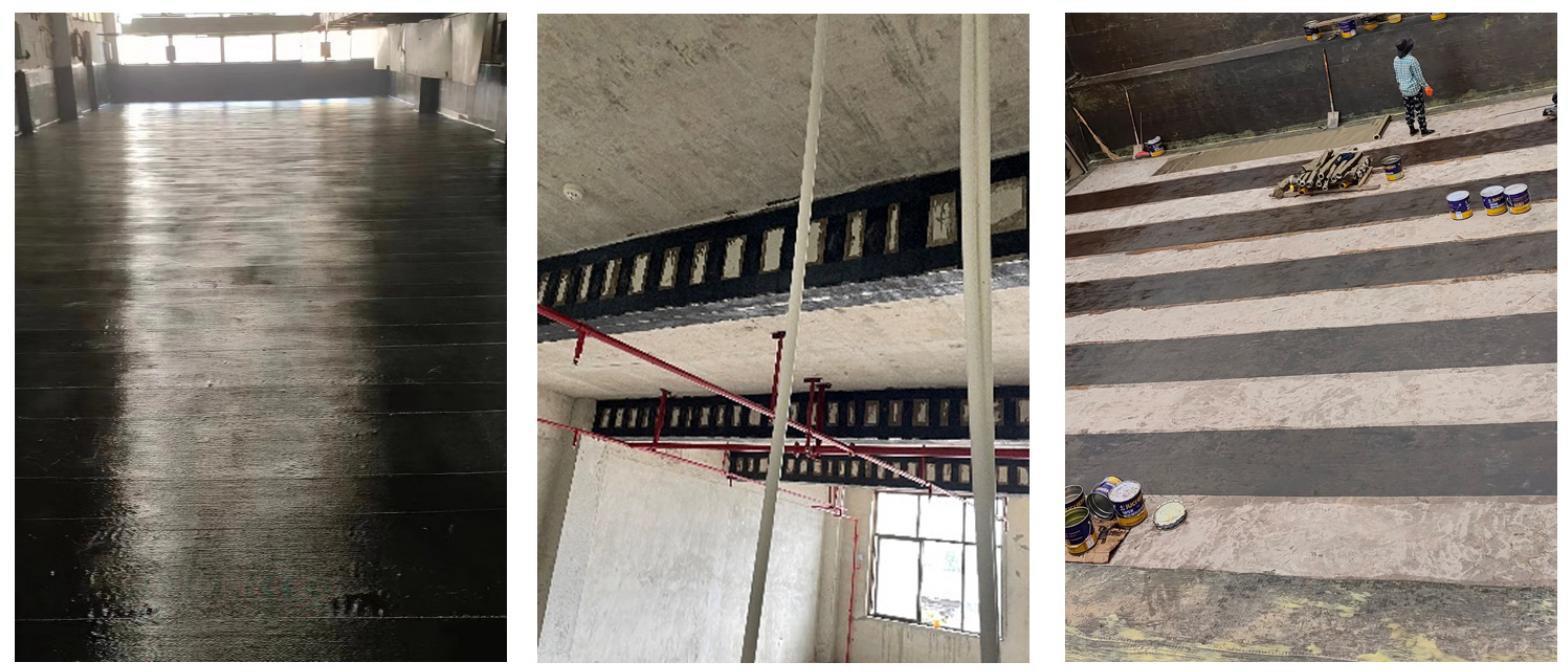
Product Overview
Used for the reinforcement, strengthening, and repair of buildings and bridge structures; used for laying on the surface of anti-corrosion flooring and electrolytic cells.
The application scope of basalt fiber unidirectional fabric spans two major industrial domains where its unique directional strength and chemical resilience deliver measurable performance benefits. In civil infrastructure, the material has emerged as a preferred reinforcement medium for retrofitting aging concrete structures, strengthening load-deficient bridge girders, and repairing seismic-damaged building frames. The unidirectional architecture allows engineers to align the high-strength basalt filaments precisely along the principal tension trajectories of a structural member — an approach that maximizes strengthening efficiency while minimizing material consumption and installation labor.
In the corrosion protection sector, basalt fiber unidirectional fabric serves as a durable surfacing layer on anti-corrosion flooring systems deployed in chemical plants, wastewater treatment facilities, and industrial processing areas subject to aggressive chemical exposure. The same material is also used to line or overlay electrolytic cells in metallurgical and electrochemical operations, where it must withstand prolonged contact with acidic or alkaline electrolytes while maintaining dimensional stability under thermal cycling.
Technical Specifications
The technical parameters governing the suitability of basalt fiber unidirectional fabric for these applications include monofilament diameter (typically 13 μm), areal density options (200–300 g/m²), customizable width ranges (100–1000 mm), fracture strength ratings (≥2000–≥3000 N/25mm), and controlled elongation at break (2.0%). These specifications ensure consistent mechanical behavior across production batches and predictable composite performance when integrated with standard resin systems.
Key Features & Performance Advantages
• Directional strength concentration enables highly efficient targeted reinforcement with minimal material waste
• Superior alkali resistance prevents degradation when embedded in or bonded to concrete substrates
• Excellent chemical compatibility with epoxy, vinyl ester, and unsaturated polyester resin matrices
• Non-conductive nature makes it suitable for use near electrical equipment and in electrolytic environments
• Thermal stability up to 600–700°C ensures performance retention in fire-exposed or high-temperature process areas
• Lightweight handling reduces on-site installation fatigue compared to steel plate bonding alternatives
Application Scenarios & Use Cases
Building and Bridge Structure Strengthening: Basalt fiber unidirectional fabric is externally bonded to concrete beams, columns, slabs, and bridge decks using structural adhesives or resin-saturation systems. It is particularly effective for flexural strengthening of girders, shear reinforcement of columns, and confinement wrapping of compression members. The fabric’s conformability allows it to follow complex geometries including curved arches and irregularly shaped structural elements.
Anti-Corrosion Flooring Systems: When laid onto flooring surfaces in chemical processing plants, battery manufacturing facilities, and laboratories, the fabric acts as a reinforcing layer within multi-layered resin-based floor toppings. Its resistance to acid, alkali, and solvent attack significantly extends service life compared to conventional glass-fiber-reinforced flooring systems.
Electrolytic Cell Linings: In electroplating, electrowinning, and electrorefining operations, the fabric is applied as a protective overlay or embedded lining that resists electrolyte penetration and provides a mechanically robust barrier against physical wear from electrode handling and maintenance activities.
Industry Value & Conclusion
The dual-application profile of basalt fiber unidirectional fabric — spanning both structural reinforcement and aggressive-environment protection — underscores its versatility as a next-generation composite reinforcement material. As industries increasingly prioritize long-term durability, reduced lifecycle maintenance costs, and environmentally responsible material choices, this product category is well-positioned to capture growing market share in both the construction retrofitting and industrial corrosion-control sectors.