 中文
中文Basalt Fiber Unidirectional Fabric: High-Strength Reinforcement Material for Structural Applications
Product Overview
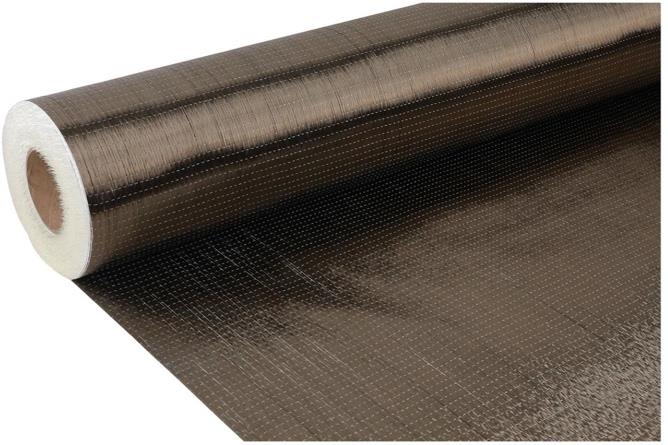
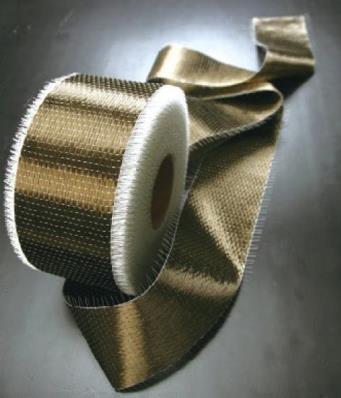
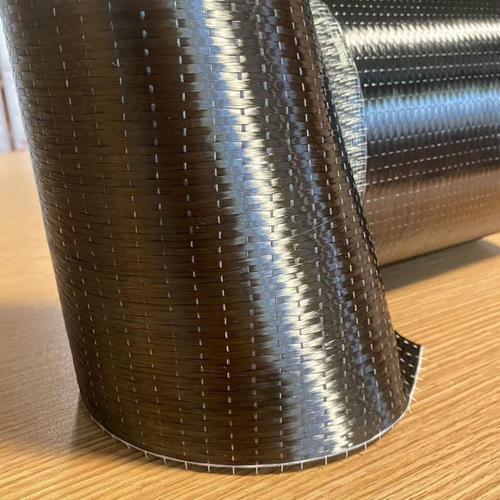
Basalt fiber unidirectional fabric is a type of basalt fiber fabric that features a large number of basalt fiber filaments in one direction (usually the warp direction), and is fixed in the other direction using hot-melt threads. As a result, virtually all of the fabric’s strength lies in the first direction.
This specialized construction makes basalt fiber unidirectional fabric an exceptionally efficient reinforcement material for applications where directional load-bearing capacity is critical. By concentrating nearly all tensile strength along a single axis, the material delivers maximum mechanical performance per unit weight — a key advantage over woven or multidirectional fabrics that distribute strength across multiple planes. The hot-melt thread binding system ensures dimensional stability during handling and composite processing while maintaining the integrity of the primary load-bearing fibers.
Basalt fiber as a raw material offers inherent advantages including excellent alkali resistance, superior temperature tolerance (continuous service up to 600–700°C), and outstanding corrosion resistance against acidic and alkaline environments. These intrinsic properties translate directly into the unidirectional fabric form, making it suitable for demanding structural reinforcement scenarios where conventional glass or carbon fiber alternatives may fall short on cost-effectiveness or environmental durability.
Technical Specifications
Common specifications of basalt fiber unidirectional cloth:
| Monofilament Diameter (μm) | Areal Density (g/m²) | Width (mm) | Fracture Strength (N/25mm) | Elongation at Break (%) |
|---|---|---|---|---|
| 13 | 200 | 100-1000 | ≥2000 | 2.0 |
| 13 | 300 | 100-1000 | ≥3000 | 2.0 |
Key Features & Performance Advantages
• Unidirectional fiber alignment concentrates virtually all tensile strength in a single direction for maximum load-path efficiency
• Hot-melt thread binding provides stable secondary-direction fixation without compromising primary-axis performance
• Fracture strength up to ≥3000 N/25mm delivers robust reinforcement capability for demanding structural loads
• Low elongation at break (2.0%) ensures minimal deformation under high-stress conditions
• Excellent compatibility with epoxy, vinyl ester, and polyester resin systems commonly used in civil engineering composites
• Inherent basalt fiber properties provide natural resistance to alkaline attack from concrete matrices
Application Scenarios & Use Cases
The directional strength profile of this fabric makes it ideally suited for targeted reinforcement of load-bearing members in infrastructure projects. In building and bridge retrofitting, the unidirectional fabric can be oriented precisely along principal stress trajectories to maximize strengthening efficiency with minimum material usage. For anti-corrosion flooring systems and electrolytic cell linings, the fabric serves as both a structural layer and a chemically resistant barrier, leveraging basalt’s innate durability against aggressive industrial environments.
Typical deployment methods include wet layup with hand lamination, vacuum-assisted resin transfer molding (VARTM), and externally bonded reinforcement (EBR) systems applied to concrete, steel, or timber substrates. The fabric’s conformability to curved surfaces and its ability to be cut and tailored on-site make it a versatile choice for field installation in repair and strengthening operations.
Industry Value & Conclusion
Basalt fiber unidirectional fabric represents a strategically important addition to the modern civil engineer’s reinforcement toolkit. Its combination of high axial strength, chemical inertness, thermal stability, and cost competitiveness positions it as a compelling alternative to traditional materials across a wide spectrum of structural enhancement applications. As infrastructure aging and sustainability concerns drive demand for durable, long-life reinforcement solutions, this product category continues to gain traction in global markets focused on resilient construction practices.